Showing posts with label Gun. Show all posts

Tuesday, 11 July 2023

Going Ballistic

 
HMS Vanguard firing her eight 15 inch guns off Malta photographed by a Supermarine Sea Otter from HMS Falcon on the 16th of May 1949
 
 
There are two kinds of people in this world,those who think small calibre,rapid firing guns are more effective than large calibre guns and those who have studied ballistics; until the twentieth century guns were the dominant naval weapon but since the ascendance of mines,torpedoes,aircraft and missiles interest in naval gunnery has declined,leading to a lack of knowledge of ballistics in naval circles and herein we shall look at two examples of this.
 
One of the Fleet Flagship Her Majestys Ship Albions Heavy Machine Guns being used against a static target on the 27th of March 2019
 
 
A recent article by NAVYLOOKOUT claimed that the elderly .50 Browning Machine Gun cartridge "is one of the few rifle cartridges that can boast a ballistic coefficient of 1.0" (the undefined coefficient is G1),which is technically true as there are high ballistic coefficient bullets available for that cartridge but their increased length and weight reduces muzzle velocity resulting in inferior performance at typical combat ranges but superior performance in the extreme long range target shooting competitions for which they are designed,which is why most military projectiles have a far lower ballistic coefficient but higher muzzle velocity resulting in external ballistics inferior to those of the Three Eights Inch Machine Gun proposed herein,which shall also be lighter and faster firing than the Browning Machine Gun.
 
HMS Plymouth and HMS Yarmouth bombarding Argentine positions on Brown Mountain during the assault on South Georgia on the 25th of April 1982
 
 
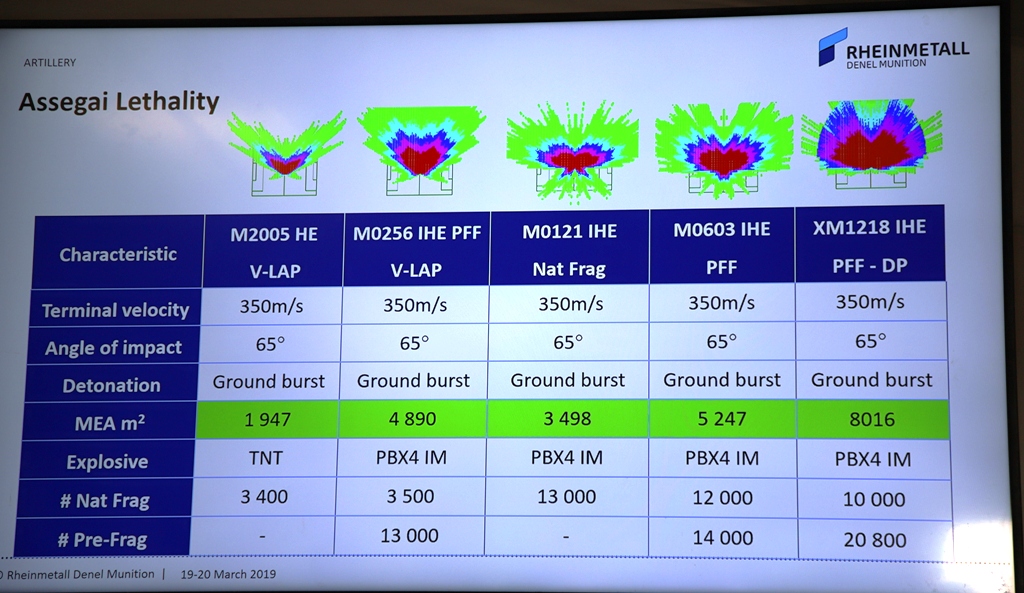
The Navy Matters blog recently published an article titled "Naval Gun Accuracy" which appears to be about precision rather than accuracy and which states "We have to be down around 0.1 deg or less deviation to hit our predicted intercept point close enough to be effective" but then goes on to say "my estimate is that deviations of 0.5-5 degrees are normal",an overestimate of between one and two orders of magnitude (the precision of modern small arms is well documented thanks to hundreds of millions of target shooters and the precision of modern artillery is being demonstrated every day in Ukraine),one manufacturer claims a probable error in azimuth of plus or minus ten metres at a range of twenty thousand metres and given that a modern 155mm shell generates a lethal area approaching the size of a football pitch that implies a high probability of a one shot kill against static infantry in the open and is consistent with the performance of naval gunfire in the Falklands War where "Such was the accuracy of NGS that specific targets could be accurately engaged, including a radar aerial that was ‘toppled from it's plinth’ by HMS Glasgow.....It was quite accurate. In some cases, it was too accurate. They had to employ a spreading fire to make it less accurate because it was all coming down in the same place.....it was gauged that during Operation Corporate, a barrage of twenty-five rounds of 4.5” NGS would be dispersed within an area that was smaller than a tennis court".
 
The Babcock Arrowhead 140 on which the Type 31 frigate is based
 
 
The article also claims that "if we fire enough shells toward the predicted intercept point, one or some of them will, statistically, wind up being close enough to be effective. This argues for smaller caliber projectiles that can be fired quickly and in large numbers." but a missile flying at twice the speed of sound moves over two hundred yards in the time it takes a 57mm Bofors Mark 3 gun to fire a single shot and thus the firing of each round is a discrete event and since a smaller calibre projectile has a lower sectional density for any given form factor it decelerates more quickly,takes longer to cover any distance and consequently suffers more drop due to gravity requiring a higher trajectory with a longer flight path and longer time of flight,allowing the target more time to manoeuvre away from the point of detonation,a problem exacerbated by the smaller effective radius of the smaller shell,resulting in a lower kill probability,thus the conclusion that "if we’re trying to shoot down an anti-ship missile, we need small, light, very rapid fire guns" is the very opposite of the truth.
 

Thursday, 19 May 2022

Two Piece Or Not Two Piece,That Is The Question

 
Her Majestys Ship Prince of Wales exercising with Lightnings from 207 Squadron Royal Air Force for the first time on the 9th of September 2021
 
 
Short Take Off and Vertical Landing naval aircraft have never generated higher sortie rates in combat than conventional aircraft,and logic suggests they never shall as they spend more time undergoing maintenance due to their complex vertical lift systems,but on some British websites it has become a matter of lore that they do,as has the idea that American Abrams Main Battle Tanks cost less than the United Kingdom's Challengers,that Black Hawk helicopters cost less than Wildcats,and that small calibre guns are better at engaging aircraft than large ones,some even think tank guns with single piece ammunition are better than those with two piece ammunition and that shall be the subject of our lesson for today.
 
A cutaway Israel Military Industries single piece 120mm Armour Piercing Fin Stabilized Discarding Sabot cartridge showing the projectiles intrusion in to the case
 
 
Longer kinetic energy projectiles are better at penetrating armour than short ones,but the charge and projectile of single piece cartridges are stored in series with each other and the Cartridge Over All Length is constrained by the length of the space in which it is stored which means that a longer projectile must intrude further in to the cartridge case and must be shorter than the overall length,and the longer it is the more chamber volume it consumes leaving less space for propellant and therefore reducing muzzle velocity,which is a significant disadvantage.
 
Troopers from the Queens Royal Hussars load their Challenger 2 tanks during the Strong Europe Tank Challenge at Grafenwoehr in Germany on the 7th of June 2018
 
 
The length of two piece ammunition is also constrained by the available storage space,but as the charge and projectile are in series only when loaded in to the gun (at which point there is no restriction on over all length because the barrel has a hole at the other end),the projectile can occupy the entire length of the available storage space and therefore can be longer than the projectile of a single piece cartridge,without intruding in to the chamber,leaving more volume available for propellant and thereby increasing muzzle velocity,which is a significant advantage.
 

Sunday, 15 April 2012

Harrier,Storm Shadow And Brimstone


There are many people who believe that the Harrier aircraft could not carry the Storm Shadow and Brimstone missiles.


"The Tornados have delivered [MBDA] Storm Shadows to penetrate hardened buildings and the dual-mode Brimstone,neither of which could have been delivered by the Harrier."


Air Chief Marshal Dalton,the current head of the British Royal Air Force (R.A.F.),and a former Tornado pilot,may not have read our previous piece "What To Cut: Typhoon,Harrier And Nimrod Versus Tornado And F.S.T.A.". 


"The Harrier aircraft was withdrawn from service on 15 December 2010.

Prior to its withdrawal,it had an operational emergency clearance to operate Baseline Brimstone.

In order for the Harrier to use Dual Mode Seeker Brimstone,we would have had to extend the provision for the weapon and conduct a full trials programme on Harrier.

Although capable of carrying Storm Shadow,Harrier was not cleared to do so when it was withdrawn from service."


Nick Harvey also said in Parliament on Thursday 18 November 2010:


"The Ministry of Defence has assessed that it would in principle be technically feasible to launch the Storm Shadow missile,which is the UK's only air launched cruise-missile, from a number of in-service and future fixed-wing platforms other than the Tornado fast jet.

These include the Harrier GR9, Hercules C-130J, A400M, Typhoon and joint strike fighter."


Note how the opinions of senior Royal Air Force officers influence the opinions of government ministers who rely on their advice:

"The military advice is that the Tornado has a greater capability.

The primary capability advantages of the Tornado GR4 over the Harrier GR9 include greater payload and range and integration of capabilities,such as Storm Shadow,fully integrated dual-mode Brimstone,the Raptor reconnaissance pod and a cannon."


When Lord Astor says "the military advice is....",he probably means "Royal Air Force officers told us...".

On paper,theTornado has a range and payload advantage over the Harrier.

But wars are not fought on paper.


In the real World the Harrier would have had a significant range and payload advantage over the Tornado on recent operations in Libya.


The Harrier already had an "emergency clearance" to fire baseline Brimstone (dual mode Brimstone is almost identical).


Harrier could have carried Storm Shadow if it's integration had not been cancelled.


Harrier carried the Digital Joint Reconnaissance Pod instead of Raptor pod.


Harrier had rocket pods instead of cannon.


Though the American Harriers do have cannon pods and they could probably have been carried by British Harriers also.


Note that this official Ministry of Defence aircraft hazards document lists both Brimstone and Storm Shadow as "weapon types capable of carriage" by the Harrier.

Note that this official Ministry of Defence document lists the Harrier as an aircraft which can carry Storm Shadow. 


Note that this official Ministry of Defence document lists the Harrier as an aircraft which can carry Brimstone.