Showing posts with label Sea Ceptor. Show all posts

Sunday, 18 October 2020

The Type 31 "Frigate": Roles


The Royal Navy is currently procuring five Type 31 surface combatants,costing two thousand million pounds,as replacements for five Type 23 or Duke class frigates,here we shall consider which roles these new vessels shall be suited to.


The most basic of the major warships shall be the humble Albatross class naval cutters,chartered to the Waterguard service,which shall be forward deployed in often remote locations to perform civil tasks such as law enforcement,pollution control,research and life saving.


Whilst the Type 31's size and diesel propulsion shall give them reasonable range,endurance,speed and sea keeping for Waterguard cutter tasks,their complex weapons and sensors shall create large crew and maintenance requirements,neither of which is desirable for vessels which must spend long periods far from a naval dockyard.


The Fishery Protection Squadrons' patrolling brigs shall be more complex vessels than the Waterguard cutters,for which they shall provide distant cover,carrying an armoured turret containing two Five and a Half Inch Naval Guns and able to fire three short tons of projectiles per minute to a range of forty miles for engaging land targets,providing local area air defence against subsonic targets,providing point air defence against supersonic targets and crippling or destroying any surface vessel of any size or type currently in service.


The Type 31's hull,machinery and sensors shall be adequate for the role of a patrolling brig,however,their Bofors 57 Mark 3 guns shall be out classed by the armament of cruisers,destroyers,frigates,corvettes and patrol vessels operated by Russia,China,Iran,North Korea,Argentina,Cuba,Venezuela,Spain and,even,the Republic of Ireland (not to mention Syrian coastal defence guns) making them incapable of protecting the United Kingdom's shipping by seeing off foreign warships or of providing useful fire support to marines.


The sloop shall be a more sophisticated vessel than the patrolling brig,intended to perform a variety of specialised tasks such as mining and hydrographing in addition to performing all of the roles of the brig.


The Type 31's shall lack the space necessary to accommodate specialised equipment such as the Eighty Foot Mine Hunting Launch and the large sonars used for surveying,in addition to their inadequacies in the patrolling brig role.


The destroying frigate shall be the most sophisticated of the surface combatants,being able to destroy sea (both on and below the surface),air,land and even space targets in the case of fully upgraded vessels,with missiles,guns and torpedoes whilst also carrying helicopters,boats,vehicles and marines.


The Type31s,despite being based on the design of a "credible frigate",shall have no ability to engage submarines,such as those used by Russia,China,Iran,North Korea,Argentina,Cuba,Venezuela,Spain and,even,drug cartels,due to their lack of a suitable sonar suite and shall be unsuited to engaging land and sea surface targets due to their small calibre guns and lack of heavy missiles.


The Type 31s shall be able to provide local area air defence to high value assets,such as the Queen Elizabeth class flying ships,with their twelve Sea Ceptor missiles,provided there is no submarine,surface ship or land based threat (either due to a lack of enemy assets or the presence of friendly frigates) but the same effect might be achieved at a fraction of the cost by adding more effective Stand Alone Defensive Systems and missiles to those high value assets,which already have the systems to support them.


Some have suggested that the Type 31 shall be suitable for dealing with,near mythical,"small boat swarms" but such a threat is best dealt with at long range by combat aircraft or helicopters,as the Royal Navy has proven,or,as the United States' Ship Vincennes demonstrated,with a larger calibre gun rather than at very short ranges with a smaller gun.


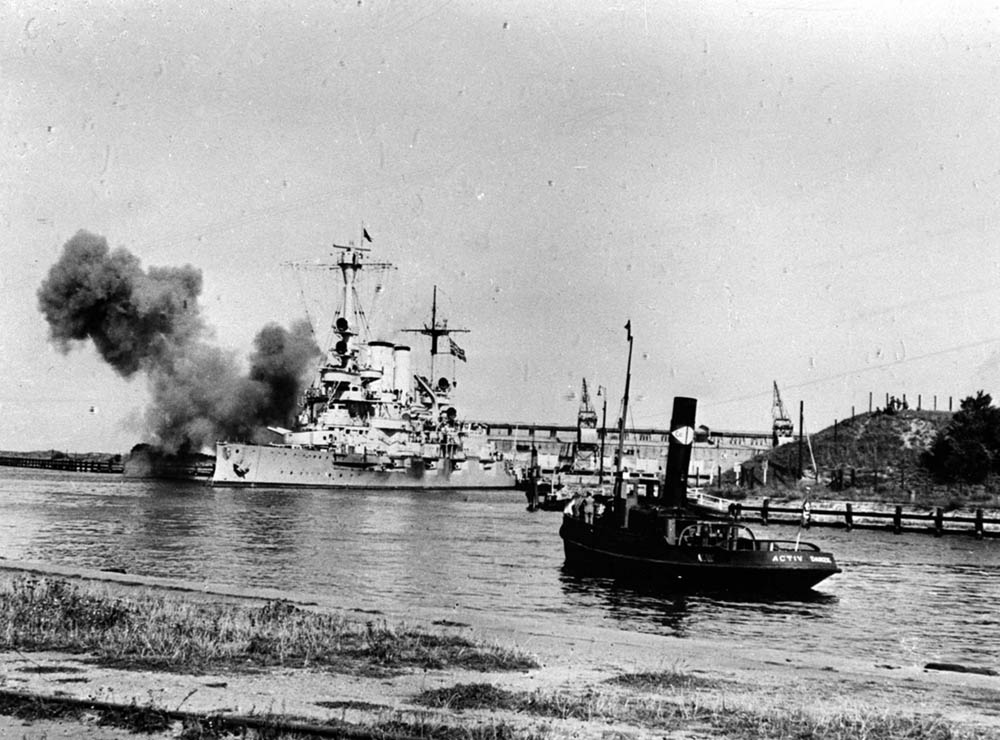
The Schleswig-Holstein opening,should permit small boats to get close to a Type 31 in peace time before beginning a war by attacking it but that is somewhat unlikely as it would require the enemy to keep their armed forces on a war footing,without anyone noticing,whilst waiting for the uncertain outcome of a small boat attack on a low value target to initiate combat operations.


A terrorist small boat attack such as that on the United States' Ship Cole shall be far more likely but Bofors guns are not the most appropriate way to deal with a threat which may be avoided simply by using secure harbour facilities,a lesson which the Royal Navy often seems to forget.


The Bofors 57 Mark 3 shall add a fourth short range air defence system to the Type 31 class which shall also have two Bofors 40 Mark 4s (which shall at least be well positioned,a refreshing change for the Royal Navy) and Sea Ceptor missiles,but these Bofors guns shall be funded at the expense of more useful systems such as sonars,torpedoes,larger calibre guns and heavy missiles.


The United States' Navy also uses the Bofors 57 Mark 3,which it calls the Mark 110,and,despite having "concluded that the MK46 was more effective than the MK110" (the ballistically literate consider this improbable),intends to fit them to it's new Constellation class frigates,which shall otherwise be rather more credible than the Type 31s,incidentally the Mark 46 uses the same 30mm gun found on many Royal Navy warships and our proposed Type 23M or Royal Duke class.


An earlier generation of American "frigates" (American frigates have somewhat different origins to the Royal Navy's),the Perry class,carried the short ranged 76mm Mark 75 gun which saw very little combat use.


In contrast,the longer ranged and harder hitting 4.5-inch Mark 8 gun is one of the most frequently used weapon systems carried by Royal Navy frigates and destroyers,having engaged aircraft,missiles,ships and land targets in Iraq,Libya and particularly the Falklands,where land based artillery was subject to severe logistical constraints and little air support was available for ground troops.


Had the Type 31s been designed to carry the 4.5-inch Mark 8 naval gun,like our proposed Royal Duke class,then they should have been able to out gun most naval patrol vessels and also usefully engage land targets,in addition to having superior air defence capabilities,but with the Bofors 57mm Mark 3 as a main gun they shall be little more than "Faux Frigates" (F.F.31) which shall look like real warships but be unable to perform their roles.


It is noteworthy that the Royal Navy decided to adopt the previously alien Bofors 57 Mark 3 shortly after agreeing to closer collaboration with the United States' Navy,there is then a possibility that the Type 31s have been rendered useless in the name of Americanisation.
 

Friday, 15 June 2018

The Type 23M Frigate


This post should not be regarded as an endorsement of the Royal Navy's plan to purchase the Type 31 frigates.


Picture: Grand Logistics

It is the position of this blog that the Royal Navy should have replaced it's Type 22 frigates,Type 23 Frigates and Type 42 destroyers with a single class of multirole surface combatants instead of the Type 45 anti-aircraft destroyer,Type 26 anti-submarine frigate and Type 31 "general purpose" frigates.
Had it done so,it would not be in the mess it is in today.


There would have been no need to develop,manufacture and maintain three different surface combatant hulls and three different propulsion,steering and power generation systems.


There would have been no need to develop,manufacture and maintain two different medium range radars and two different anti-aircraft missile systems.


There would have been neither the need for expensive design,manufacture and support of very low production volume warships,weapons and equipment,nor the need to spend hundreds of millions of pounds on River class patrol vessels to keep ship yards open.

 
Picture: P.O.A. (Phot.) Ian Arthur,Crown Copyright

The savings from reduced development spending and,more efficient,higher volume manufacturing would have paid for a larger fleet of more capable surface combatants.

 
This is the Type 23 frigate,which the Royal Navy plans to replace with a combination of eight Type 26 Frigates and five Type 31 frigates.
The Type 23,or Duke Class,is the most successful class of warships designed for the Royal Navy since the Second World War.
Though they are far from perfect,the Type 23s have proven to be perfectly adequate in most respects,unlike their predecessors,the more expensive and less flexible Type 22 frigates.
The £1250 million allocated for the procurement of five Type 31e frigates is similar to the original procurement cost of five Type 23 frigates,after allowing for inflation.
The Type 23 frigates have had long service lives,their longevity is a result of their flexibility,sound design (unlike the preceding Types 21,22 and 42 they have not suffered from structural problems and unlike the succeeding Type 45 they have not suffered from engine problemsand moderate operating costs.
Their moderate operating and procurement costs spread thinly over long service lives have resulted in excellent value for money.
A stark contrast to the shorter lived Type 22 class which,despite costing more to build,was less useful,more expensive to operate and,in the longer,multirole batch three,suffered from hull cracks.


As is the case with military aircraft,multirole ships stay in service for longer,providing better value for money,because they are more useful more often.


The Type 23's most significant weakness,the short range and limited utility of it's Sea Wolf air defence missile system,has been mitigated by it's replacement with the longer ranged and multipurpose Sea Ceptor missile system.


The 4.5" Mark 8 gun has been out ranged by land based artillery guns for over forty years,a significant problem for ships which engage in Naval Gunfire Support (N.G.S.) which cannot be solved by spending forty five million pounds per ship on the 5" Mark 45 gun,which also suffers from the same problem,but which may be solved with our proposed Five and a Half Inch Naval Gun or mitigated at more moderate cost by means of a slower burning propellant and a longer barrel for the 4.5" Mark 8 gun,to increase it's range and reduce time of flight at all ranges.

 
Picture: Katie Chan

The Type 23 frigate's two DS30M Mark 2 30mm Automated Small Calibre Guns are unable to fire dead ahead and astern and,as they do not cover overlapping sectors,only one gun may be brought to bear on any target with no redundancy in the event that a gun is unavailable due to technical failure,battle damage or a lack of ammunition (this very poor design is common to many British warships).
In emergencies and when performing special tasks a single helicopter hangar is a significant inconvenience,even for a ship which routinely carries only one helicopter.


The Type 23's boats' lack of horse power,fire power and protection may be a cause of embarrassment to naval boarding parties.


The Royal Navy is often unable to participate in cruise missile bombardments,one of the most common naval engagements,due to a total absence of long range land attack missiles on it's surface warships.
When the ship's helicopter is unavailable (due to maintenance,technical failure,battle damage,crew fatigue,weather,refuelling,rearming or accident),the Type 23's only anti-submarine weapon is the light weight Stingray torpedo which is out ranged by the heavy weight torpedoes used by submarines.


This is the Type 23M frigate,our proposed replacement for five Type 23 frigates,which is intended to satisfy the Type 31 requirement and to provide a basis for an entry to the United States' Navy's F.F.G.(X.) competition.


The superstructure of the Type 23M shall be enclosed to increase structural depth,increase reserve buoyancy,increase internal volume,reduce maintenance and reduce electromagnetic reflections,added top weight being counter ballasted by thicker bottom plates (doors shown concealing the boats and replenishment equipment may be omitted to reduce weight,cost and maintenance).
From the flight deck level upwards,Type 23M frigates shall be parallel sided from the front of the superstructure back to the transom in order to reduce the cost of design and construction,increase righting moment and structural width,widen the flight deck and maximise useable internal volume.
The Type 23M shall be a modernised Type 23 frigate,based on the same hull form,with similar internal arrangements and using much of the same,newly built or refurbished,equipment as the current Type 23 frigates.

 
Picture: Grand Logistics

New types of equipment shall be specified only where it is operationally or financially beneficial.


For example,to replace obsolescent components,reduce manpower requirements,reduce maintenance or reduce fuel consumption.

The two,venerable,Rolls Royce Spey gas turbines of the original Type 23 frigate shall be replaced with a single,more efficient,Rolls Royce MT30 gas turbine on the Type 23M (these also being used by the Type 26 frigates and Queen Elizabeth class aircraft carriers) to extend the vessel's range and endurance.

The Type 23M shall use the same,recently upgraded,Rolls Royce M.T.U. 12V 4000 M53B diesel generators as the current Type 23 frigates.

The Type 23M shall use newer and more efficient electric propulsion motors than those fitted to the current Type 23 frigates to extend it's range and endurance.

The Type 23M shall use the same propellers,shafts,seals and bearings as the current Type 23 frigates.

The Type 23M shall use the same rudders and steering gear as the current Type 23 frigates.

The Type 23M shall use the same,recently upgraded,towed and hull mounted,sonars and countermeasure systems as the current Type 23 frigates.

The Type 23M shall use the same,recently upgraded,Artisan and SharpEye radars as the current Type 23 frigates.


The Type 23M shall use the same Sea Ceptor missiles which are being fitted to the current Type 23 frigates.


The Type 23M shall use the 4.5" Mark 8 Modification 2 gun,this being a modest upgrade on the 4.5" Mark 8 Modification 1 gun used by the current Type 23 frigates,with a barrel of seventy two calibres length and slower burning propellants,a more economical way to increase gun range than adopting the 
5" Mark 45 gun.


The Type 23M shall use the same DS30M 30mm cannon as the current Type 23 frigates but shall carry them atop the bridge and hangar where they shall cover wider,overlapping,sectors and be able to fire ahead and astern.
The Type 23M shall use the same Merlin and Wildcat helicopters,with the same support equipment,as the current Type 23 frigates but shall have a wider hangar,able to accommodate two Merlins when needed,and a wider flight deck.

The Type 23M shall use two Pacific 950 boats,with more power,payload,protection and firepower than the two Pacific 24 boats carried by the current Type 23 frigates.


Picture: Intelligence Specialist 1st Class Kenneth Moll,United States Navy photograph

The Type 23M shall use two,eight cell,strike length Mark 41 Vertical Launch System modules,in a narrow vee configuration,in lieu of the eight Harpoon Mark 141 Guided Missile Launch System on the current Type 23 frigates,enabling the use of vertically launched anti-ship,anti-submarine and land attack missiles,a typical payload being eight vertically launched Anti Submarine Rockets  (V.L-A.S.ROC.) or Spearfish Torpedoes and eight dual purpose Tomahawk or Perseus missiles.


A lighter,cheaper,more flexible and less intrusive alternative to the strike length Mark 41 launcher which may be fitted to the Type 23M,Type 23,Type 26 frigates and Type 45 destroyers,is to have Spearfish torpedoes and Perseus,Tomahawk,Harpoon or Naval Strike Missiles launched from canisters on the fore deck (along with a single eight cell tactical length Mark 41 launcher for thirty two quad packed Sea Ceptor missiles on the Type 23M).


The Type 23M shall use either the same Magazine Torpedo Launch System and Stingray lightweight torpedoes as the current Type 23 frigates,supplemented by a handful of vertically launched anti-submarine missiles for use when the helicopter is not available or,preferably,canister,tube or vertically launched Spearfish heavyweight torpedoes which shall be useful against both submarines and surface ships.


The Type 23M,or Type 23 Batch 2,frigates shall be known as the Duke of Cambridge or Royal Duke class after the lead ship H.M.S. Cambridge,her sister ships being Cornwall,Edinburgh,Gloucester,Normandy and,should further funding become available,Rothesay,Sussex and York.